Why the First Heatwave Is the Danger Zone
Every May and June, our phones ring the same way: a homeowner calls at 7 PM on the first 90-degree day of the year because their AC turned on for the first time since September and something is wrong. The system ran fine last fall. Nothing changed. Why now?
The answer is a combination of thermal shock, mechanical stress, and months of inactivity. An air conditioner that has been sitting dormant since October is not the same machine it was when it last ran. Lubricants settle. Seals dry out. Capacitors degrade under temperature swings. And then on the first 95-degree day, the compressor is asked to go from zero to full load in the span of an afternoon, sometimes for 8 or 10 hours straight.
That is a stress profile unlike anything else in the system's annual cycle. Compare it to October, when the unit runs for short periods during mild temperatures, and the difference is stark. The first real heatwave is effectively a cold-start stress test. Systems that were marginal going in don't come out.
In Hamilton County, this typically happens in late May or early June. The gap between "we should turn the AC on soon" and "the house is 84 degrees and it's 9 PM" is often a single afternoon.
The 4 Parts Most Likely to Fail Under First-Heat Stress
1. The Run Capacitor
The capacitor is the most commonly replaced component in residential AC systems, and a failing or leaking capacitor has a signature all its own. It's a cylindrical component inside the electrical panel of your outdoor unit, and it stores charge to start and run the compressor and fan motors. Capacitors degrade over time, and heat accelerates the process. A capacitor that tested within spec in September may be below threshold by June.
Under high ambient temperatures (the outdoor unit works harder when it's already 90 degrees outside), a weak capacitor simply can't provide the startup torque the compressor needs. The result is a compressor that hums, fails to start, and eventually trips the breaker or shuts down on thermal protection. You hear the outdoor unit start, struggle, and stop, often within seconds.
2. A Refrigerant Leak Revealing Itself Under Load
Small refrigerant leaks often go undetected during mild weather because a slightly low charge still produces acceptable cooling when the system isn't working hard. Under full heat load, the same small leak becomes obvious: the system runs constantly but can't hold temperature, or the indoor coil freezes over from running low on refrigerant.
The leak was there before the heatwave. The heatwave just made it impossible to ignore. This is why systems that "seemed fine" in mild weather fail on the first hot day.
3. Dirty Condenser Coils
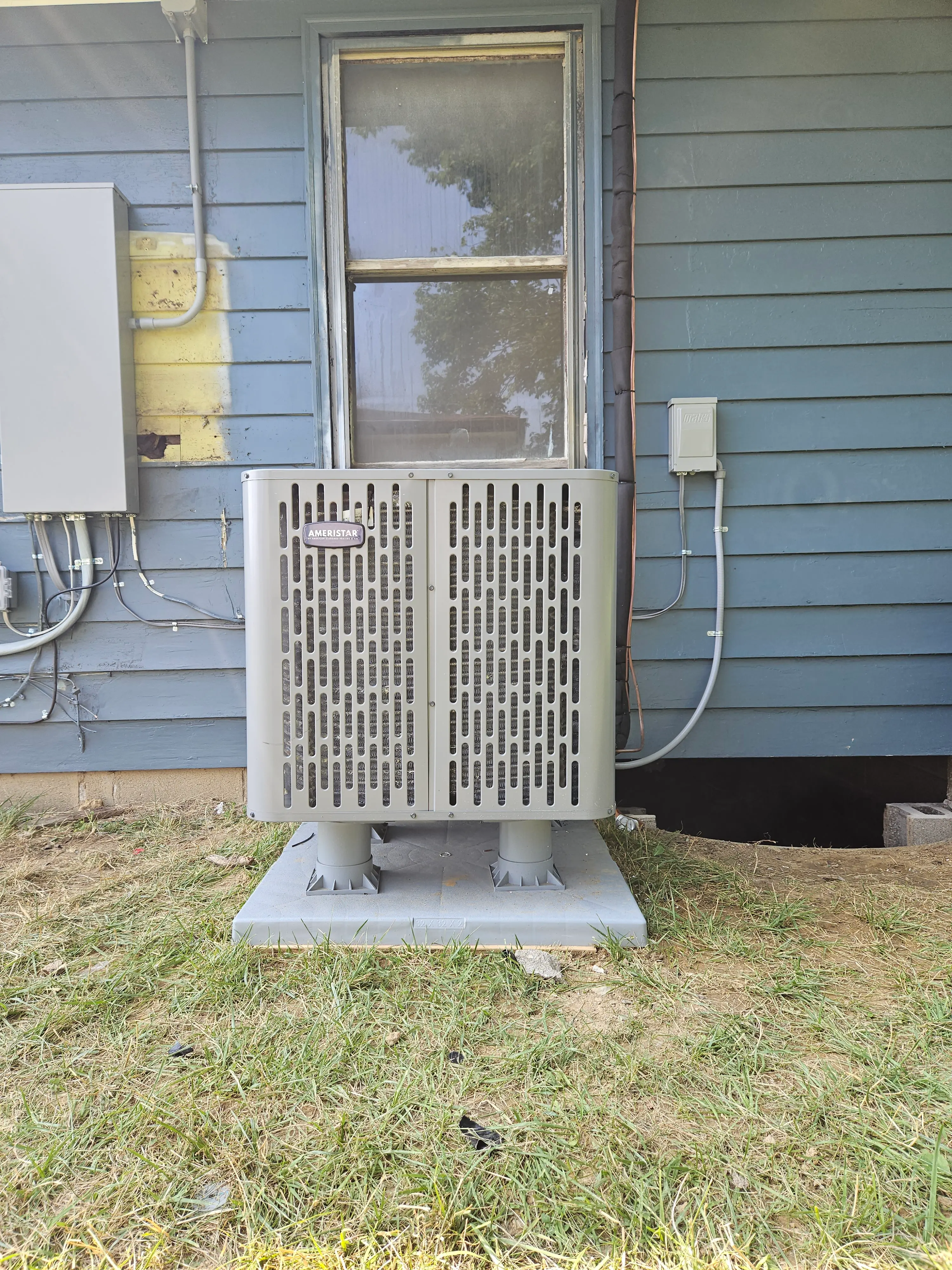
The outdoor condenser unit rejects heat by passing outdoor air over aluminum fins. Over a winter and spring, those fins collect cottonwood, grass clippings, pet hair, and general debris. A coil that is 20% blocked has to work significantly harder to reject the same amount of heat, and on a 95-degree day, "harder" often becomes "unable to keep up."
The system doesn't fail outright. Instead, it runs at reduced efficiency, draws more amperage than the electrical components were sized for, and runs longer cycles. That extra runtime and amperage accelerates wear on every moving part.
4. The Contactor
The contactor is the high-voltage switch that connects utility power to the compressor and condenser fan. Over time, the contact points pit and erode from the electrical arcing that occurs every time the system cycles on. A pitted contactor may close inconsistently, causing hard starts or intermittent operation, both of which hammer the compressor.
Contractors are inexpensive parts. Compressors are not. A $30 contactor replacement at a spring tune-up routinely prevents a $1,500 compressor failure in August.
Warning Signs Your Unit Is Struggling
These are the signals to watch for on the first warm days of the season:
- System runs but doesn't cool: The thermostat calls for cooling, the outdoor unit runs, but room temperature barely drops. Likely causes: low refrigerant charge, dirty coils, or a failing compressor.
- Outdoor unit hums but won't start: You hear a humming sound from the outdoor unit but the fan isn't spinning. Classic weak capacitor signature.
- Ice forming on the outdoor unit or copper lines: Ice on the refrigerant lines or coils indicates low refrigerant, severely restricted airflow, or both. Turn the system off and call a tech. Continuing to run it risks compressor damage.
- Circuit breaker trips once or twice, then holds: Intermittent breaker trips point to a compressor drawing too many amps on startup, often a failing capacitor or contactor.
- Increased energy bill without explanation: A system that is working harder than it should (dirty coils, low refrigerant, mechanical wear) uses more electricity to deliver the same (or less) cooling. An unexplained jump in your Duke Energy bill in June is worth investigating.
Pre-Season Checklist You Can Do Today
These are the steps any homeowner can take before the heat arrives. None require tools beyond a garden hose.
- Replace the air filter. A clogged filter starves the indoor coil of airflow, causing the system to freeze and reducing cooling capacity significantly. Replace it before first use, and use no more than a MERV-8 filter. High-MERV "allergen" filters restrict airflow more than most residential systems can handle.
- Clear debris from around the outdoor unit. Remove leaves, cottonwood fluff, grass clippings, and any vegetation within two feet of the condenser. The unit needs clear airflow on all sides.
- Rinse the condenser coil. With the system powered off at the disconnect, gently rinse the aluminum fins with a garden hose, spraying outward through the fins. Never use a pressure washer. It will bend the fins and permanently reduce airflow.
- Clear the condensate drain. The indoor unit produces condensate water as it cools humid air. That water drains through a PVC pipe, usually to a floor drain or outside. Pour a cup of diluted bleach (1 part bleach, 16 parts water) down the drain pan to prevent algae blockages that cause water to back up and overflow, often onto your ceiling.
- Test the system before you need it. Turn the system on during a mild day in early May and let it run for 20 minutes. If something is wrong, you want to find out when you have time to schedule a non-emergency service call, not when it's 95 degrees and you need it today.
When to Schedule Service Before It Gets Hot
Pre-season tune-ups exist precisely because everything described above is preventable. A technician performing a spring cooling tune-up will test capacitor strength, measure refrigerant charge, clean the coils, inspect the contactor, and check electrical draw on the compressor and fan motors, all before the system is under load.
We schedule the majority of our pre-season tune-ups in April and early May. By Memorial Day weekend, our schedule is typically full through June for non-emergency work. If you're reading this after a hot day that revealed a problem, call us. We offer same-day service for breakdowns. If you're reading this before the heat hits, book a tune-up now and avoid the emergency rate entirely.
The practical math: A preventive tune-up at Renew Mechanical runs $89, and that fee is credited toward any repair we find. An after-hours emergency call on a 95-degree evening starts at considerably more. The best outcome is catching a failing $40 capacitor in May instead of paying for a Sunday emergency visit in July.
Tune-ups are part of our HVAC maintenance plans. If yours already quit, start with AC repair instead.