Why AC Repair Prices Vary So Much
If you've ever received two wildly different quotes for the same HVAC repair, you're not imagining it. The Cincinnati HVAC market has a wide spread in pricing, and the reasons aren't always what you'd expect. Labor rates, parts markup, diagnostic fees, and whether a company uses flat-rate or time-and-materials pricing all affect the final number significantly.
Beyond pricing structure, scope of diagnosis matters. One technician quotes a capacitor replacement because that's what failed. Another quotes a full tune-up because the capacitor failing indicated the system hasn't been maintained. Neither quote is necessarily wrong, but they aren't comparing the same work.
This guide gives you real price ranges for the most common AC repairs in the Hamilton County market, so you can evaluate a quote with context instead of guessing.
Common AC Repairs and What They Cost in Cincinnati
Capacitor Replacement: $150 to $350
The capacitor is the most commonly replaced component in residential AC systems, and the symptoms of a failing capacitor are easy to spot once you know them. It's a relatively inexpensive part ($15 to $50 depending on specs), but labor, diagnostic time, and the company's markup on parts drive the total. A quote in the $150 to $250 range is reasonable for a straightforward capacitor swap. Quotes above $350 warrant a second opinion unless additional work is included.
Some companies offer "dual-run capacitors" that replace both the compressor and fan motor capacitors at once, a reasonable upsell on an older system where both are degraded, but unnecessary on a newer unit where only one has failed.
Refrigerant Recharge: $250 to $600+
The cost of a refrigerant recharge depends almost entirely on which refrigerant your system uses. Systems manufactured before 2010 likely use R-22 (Freon), which has been phased out of production and now costs $50 to $150 per pound on the open market. A system that needs 2 to 3 pounds of R-22 can easily reach $400 to $600 in refrigerant cost alone, before labor.
Systems manufactured after 2010 use R-410A, which is currently being phased down in favor of R-454B and R-32 under new EPA regulations. R-410A is still widely available and runs $10 to $30 per pound at wholesale. A recharge on an R-410A system is typically $200 to $400 including labor and leak detection.
Important: A refrigerant recharge is not a permanent fix if there is a leak. Adding refrigerant without locating and repairing the leak means the same problem returns. A reputable technician will perform leak detection before adding refrigerant and quote you for the full repair, not just the recharge.
Contactor Replacement: $150 to $300
The contactor is the high-voltage relay that switches power to the compressor. It's an inexpensive part ($20 to $50), and replacement is a 20 to 30 minute job for a technician. Quotes in the $150 to $250 range are typical. If you're quoted significantly more, ask for an itemized breakdown.
Condenser Coil Cleaning: $150 to $350
A professional coil cleaning (including chemical treatment and rinse) typically runs $150 to $250 as a standalone service. Some companies include a basic rinse in their tune-up package; a deep chemical clean on a heavily fouled coil may run higher. If a technician recommends a coil cleaning during a service call, ask to see the condition yourself before approving. A moderately dirty coil often just needs a rinse, not a paid cleaning service.
Blower Motor Replacement: $350 to $700
The blower motor moves conditioned air through your ductwork. It's inside the air handler and requires more labor to access than outdoor components. Parts cost $100 to $300 depending on motor type; with labor, expect $350 to $700 for the full repair. Variable-speed ECM motors are on the higher end of that range.
Evaporator Coil Replacement: $800 to $2,000
The evaporator coil sits inside the air handler and is where refrigerant absorbs heat from your indoor air. Coil replacements are major repairs. The part itself costs $400 to $1,200, and accessing it often requires removing the air handler from the plenum. The total cost also depends on whether refrigerant needs to be recovered and recharged. Get at least two quotes for a repair this size, and ask each contractor whether replacement makes more sense than the repair given the system's age.
Compressor Replacement: $1,200 to $2,800
The compressor is the heart of the AC system and the most expensive single component to replace. A compressor itself runs $500 to $1,500 depending on tonnage and brand; with labor, refrigerant recovery and recharge, and the associated electrical components typically replaced at the same time, total costs run $1,200 to $2,800.
Before approving a compressor replacement, ask whether the system is still under any warranty. Many manufacturers offer 5 to 10 year compressor warranties on registered systems. Also ask the technician directly: given the system's age and the cost of this repair, does replacement make more economic sense than repair? A trustworthy answer will walk you through the math, not just push one direction.
When to Repair vs. Replace
The HVAC industry uses a shorthand called the "Rule of 5000": multiply the system's age (in years) by the repair cost. If the result exceeds $5,000, replacement is generally the better financial decision.
Examples:
- 8-year-old system, $400 repair: 8 × $400 = $3,200. Repair makes sense
- 14-year-old system, $1,400 compressor: 14 × $1,400 = $19,600. Replace the system
- 10-year-old system, $350 capacitor: 10 × $350 = $3,500. Repair makes sense
We walked through the same math from the other direction in should you repair or replace your AC. This is a rule of thumb, not a law. A 12-year-old system in good condition with a minor repair may have several good years left. A 10-year-old system with a history of breakdowns may not. Ask your technician about the overall condition of the equipment, not just the immediate repair.
Also factor in efficiency: a 14-year-old 10 SEER unit costs significantly more to operate annually than a modern 16 to 18 SEER replacement. In some cases, the energy savings from a new unit pay for the replacement within 5 to 7 years.
What Drives the Price Up (or Down)
Emergency and after-hours calls: Any HVAC company that offers 24/7 emergency service charges a premium for evenings, weekends, and holidays, typically an additional $75 to $150 on top of standard rates. Scheduling a non-emergency service during business hours is the simplest way to avoid this.
System age and parts availability: Parts for older or discontinued systems may need to be special-ordered, adding both cost and wait time. R-22 refrigerant, as noted above, is expensive due to the phase-out. If your system is over 15 years old, parts costs will likely be higher than our ranges above.
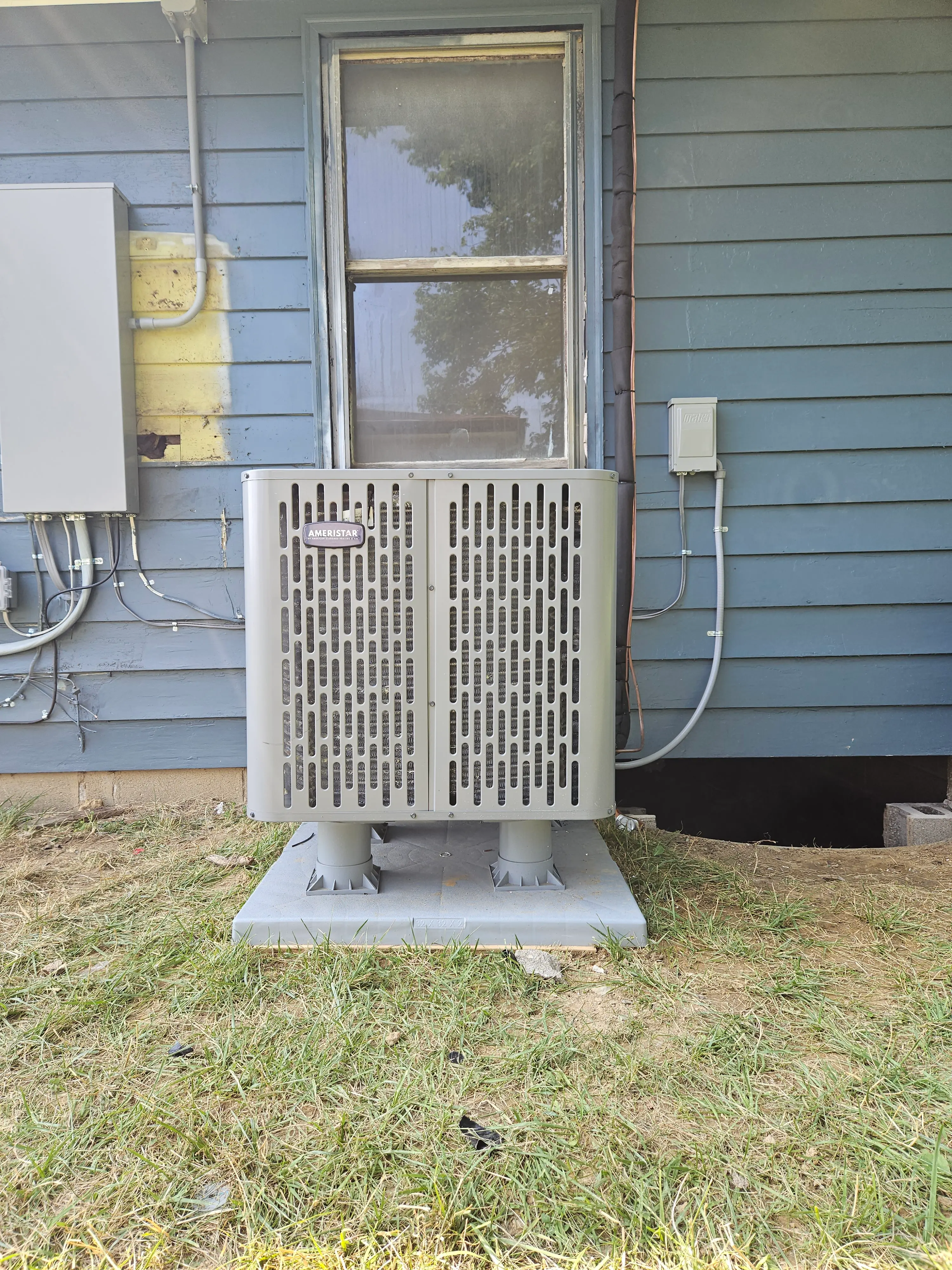
Accessibility: A condenser unit sitting on a standard concrete pad next to the house is easy to service. An air handler in a crawlspace, a rooftop unit, or a system in a hard-to-access utility room takes more labor time, and labor time is where most of the cost lives.
Whether diagnostics are included or separate: Some companies charge a flat diagnostic fee and credit it toward the repair. Others build diagnostics into the job cost. Ask upfront: "Is the diagnostic fee separate from the repair, or is it included?" At Renew Mechanical, our $89 diagnostic fee is credited toward any repair on the same visit.
How to Get an Honest Quote
A trustworthy HVAC quote should include itemized parts and labor, not a single number. Ask for a written breakdown showing the part cost and the labor cost separately. This lets you verify that the parts pricing is in a reasonable range (most parts are available online as a reference) and understand what you're paying for.
Be cautious of any quote delivered with high-pressure urgency: "We need to order the part today or we can't guarantee the price" or "This system is one repair away from a catastrophic failure" are sales tactics. A real problem has a diagnostic paper trail: a capacitor reading, a refrigerant pressure measurement, a compressor amp draw. Ask to see the numbers, not just the conclusion.
At Renew Mechanical, our technicians are salaried, not commissioned. That means there's no financial incentive to recommend a repair that isn't needed. If a repair is unnecessary, we'll tell you. If replacement makes more sense than repair, we'll walk you through the math and let you decide. Here is what our AC repair in Cincinnati includes, and what a new AC installation runs if it comes to that.